Badlav ki jhalakiya – Police brutality and how they fought it

In Rajiv Nagar, children from the Azad Jugnu Club began noticing a painful pattern in their community. Early in the mornings, when many children and adults from the Pardhi community would leave for garbage picking and daily wage work, the police would often stop them, question them, and sometimes even take them away.
Many families lived in constant fear.
Children were picked up simply for roaming on the streets early in the morning. Sometimes, even wearing good clothes became a reason for suspicion. People were asked, “Where did you steal this from?” The Pardhi community, historically labeled as “habitual offenders,” was constantly looked at with doubt and treated like criminals without reason.
Often, when children or community members were taken by the police, families were asked to pay money to get them released. Parents felt helpless. Most did not know how to question the police or where to seek support.
But the children of Azad Jugnu Club decided they could not stay silent.
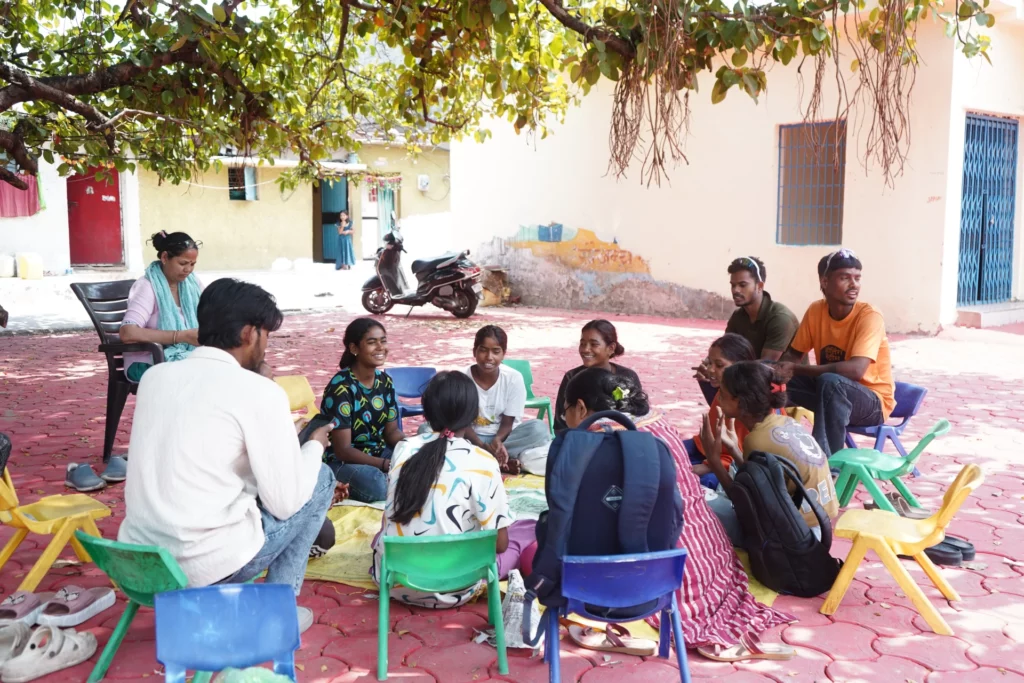
With support from their didis (facilitators), the children began discussing these incidents in their group meetings. They started asking questions:
- Why were only people from their community being targeted?
- Was this happening to everyone or specifically to Pardhi families?
- How could they prove what was happening?
Whenever they tried speaking to the police earlier, the police denied everything. So the children decided to collect evidence themselves.
For three months, the children carefully documented every incident they heard about in the community. They wrote down:
- who was taken,
- the date and time,
- the reason given by the police,
- how long the person was kept,
- and whether money was demanded for release and how much.
The children turned their lived experiences into organized community data.
After collecting months of records, the children and facilitators presented the information to senior police officials. This time, the police could not deny the pattern anymore. The evidence clearly showed repeated targeting of Pardhi community members.
Slowly, things began to change.
The unnecessary detentions were reduced, and the police became more careful before picking up children and adults simply because they belonged to the Pardhi community or were out working early in the morning.
For the children of Azad Jugnu Club, this was not just about documentation. It was about dignity, courage, and standing up for their community. They learned that even children can challenge injustice when they come together, observe carefully, and raise their voices collectively.